
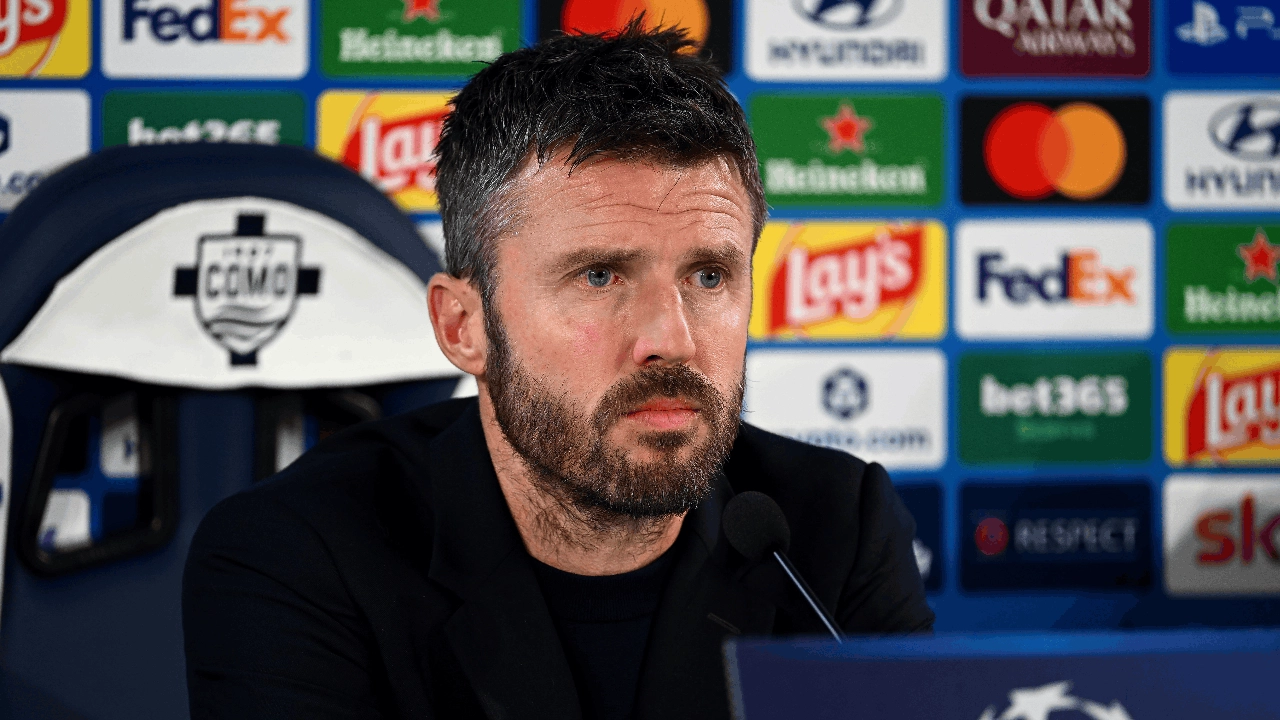
Michael Carrick answers back after Bruno Fernandes openly questions his tactics following the loss to Como.
Michael Carrick recently responded after captain Bruno Fernandes raised concerns about Manchester United’s tactics following their 4-1 loss to Como in the Champions League.
Fernandes questioned United’s pressing style after the heavy defeat to Como, who are managed by former Arsenal, Chelsea, and Barcelona player Cesc Fabregas. In the post-match interview, Carrick accepted responsibility as United’s head coach and apologized to the fans who traveled to Lombardy. This interview happened before Fernandes shared his views with TNT Sports, so Carrick was later asked about those comments during his press conference.
Carrick suggested that United’s lack of running, both with and without the ball, was also a factor in the disappointing result. “We half pressed man-to-man in the second half and still conceded a goal,” he said (via Sky Sports). “No matter what system or tactics you use, if you don’t run forward and back, you won’t win.”
When asked if the players were still committed to him after Fernandes’ remarks, Carrick said, “It’s not about playing for me; it’s about playing for this club. I’m responsible for the club and the fans, and I give my absolute best every single day. It might go well or not, but I put in everything I can. It’s about what we all give—players and staff—for this club.” When pressed on whether he felt the players were giving their all, he admitted, “I didn’t like what I saw tonight.”
Fernandes was substituted in the 67th minute, a rare move by Carrick or any United manager. After the game, Fernandes shared what he thought was a key reason for the loss during his TNT Sports interview. United has only won one game since August—a 4-0 Champions League victory over Azerbaijan’s Sabah—and Fernandes’ comments hinted at some frustration.
He explained, “It’s a staff decision to not press man-to-man all the time, sometimes leaving a bit of space to try to get the ball back quickly.” He added, “But when you give teams too much of the ball, they gain confidence. It’s up to the manager and staff to notice that—it’s not on me. I just said we need to be braver under pressure, take risks by pressing higher, and make them uncomfortable. Like they did to us—their centre-back was marking me deep in our own half.”