
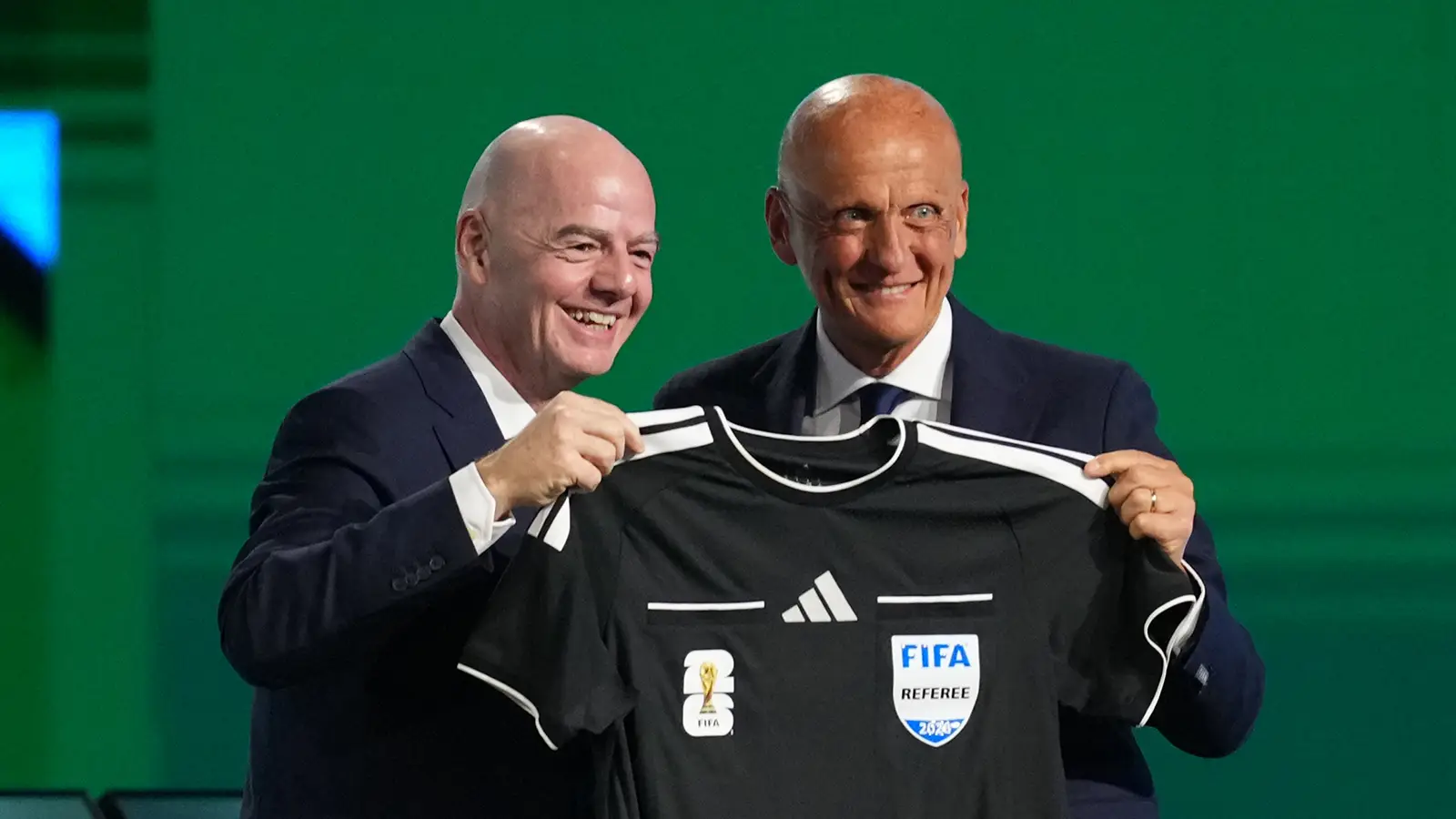
Pierluigi Collina reviews new World Cup rules, highlighting a big drop in one area
Pierluigi Collina shared his thoughts on the refereeing at the 2026 World Cup and noticed a big drop in one area. This tournament brought lots of new rules, like three-minute hydration breaks each half and players getting red cards for covering their mouth in a confrontational way.
Paraguay’s Miguel Almiron was the first player sent off for this, followed by Arsenal’s Piero Hincapie in the final moments of Ecuador’s 2-0 loss to Mexico for the same reason. Other new rules aimed to stop time-wasting, such as giving players only five seconds to take goal kicks or throw-ins, and making substitutes leave the pitch within 10 seconds. Also, if a player leaves the field due to injury, they must stay off for one minute.
Collina, who is FIFA’s Chief Refereeing Officer, wrote on the official FIFA website that these changes have worked well and everyone agrees they are good improvements. He said that in the 72 group-stage games, only one substitute broke the 10-second rule, and many players rushed to leave the field quickly, even when their team was winning, which is a positive sign.
He also mentioned that the five-second rule was broken a few times during goal kicks and throw-ins. Importantly, Collina highlighted that player injuries have dropped a lot, and there have been fewer medical staff calls, thanks to cracking down on fake injuries.
Collina said overall behavior has been great, with just a few warnings given for arguing with referees to both players and coaches. At 66 years old and respected as one of the best referees ever, he said referees are told not to punish normal contact and to keep the game flowing.
He also explained the decision to disallow Jonathan Tah’s goal for Germany against Paraguay because Waldemar Anton was judged to have blocked Orlando Gill. Germany’s coach Julian Nagelsmann called the call a “joke” after they lost on penalties in the round of 32.
Collina wrote, “Keeping your position isn’t a foul by itself, but if an attacker isn’t going for the ball and moves just enough to block an opponent on purpose, referees and VAR should check closely and step in. This especially matters if the goal is to stop the goalkeeper from defending. Coaches and players knew this, so it’s no surprise referees will call these fouls.”