
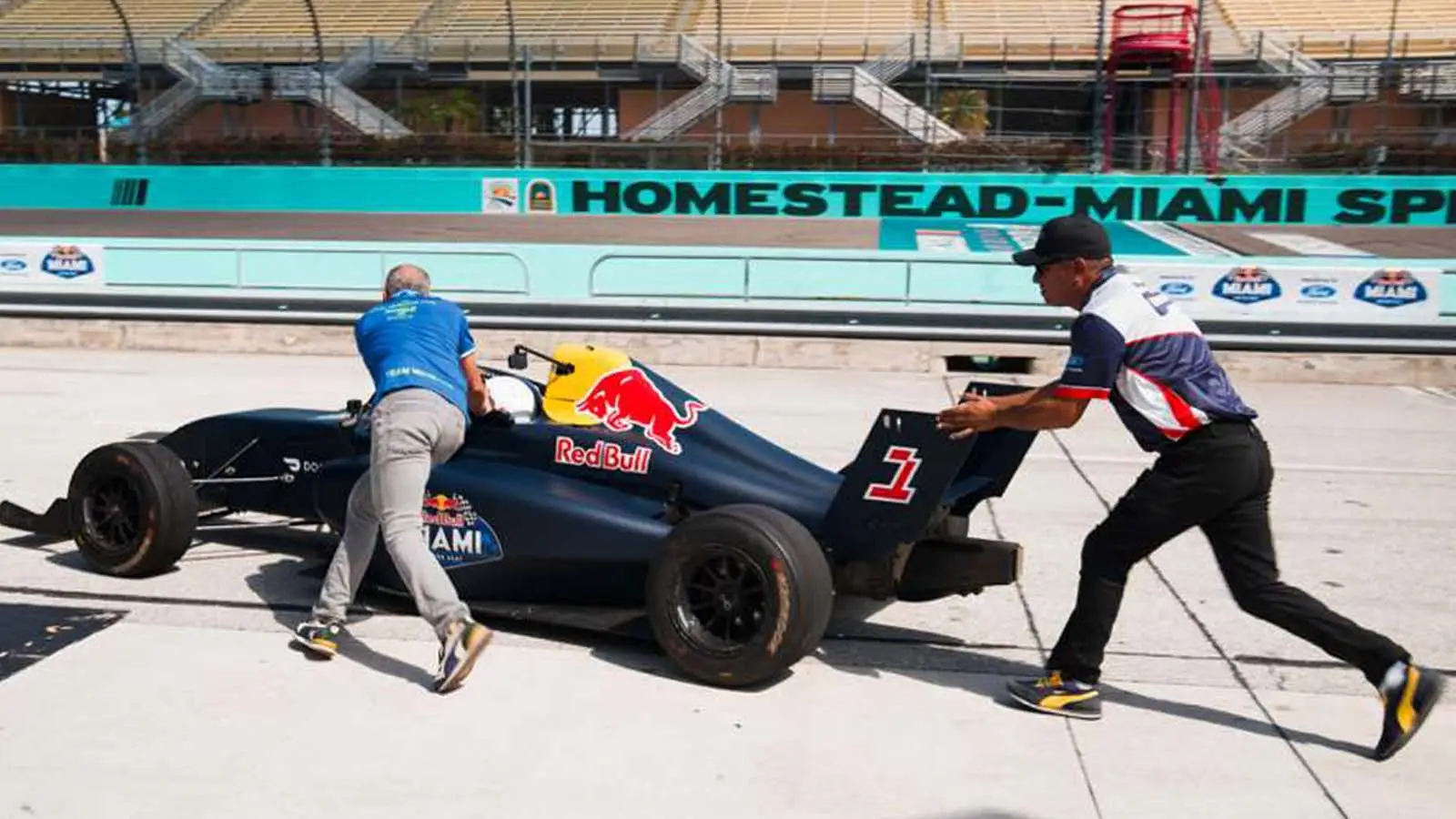
I got to do four laps in a Red Bull F4 car, and now I really feel like I’m ready for F1!
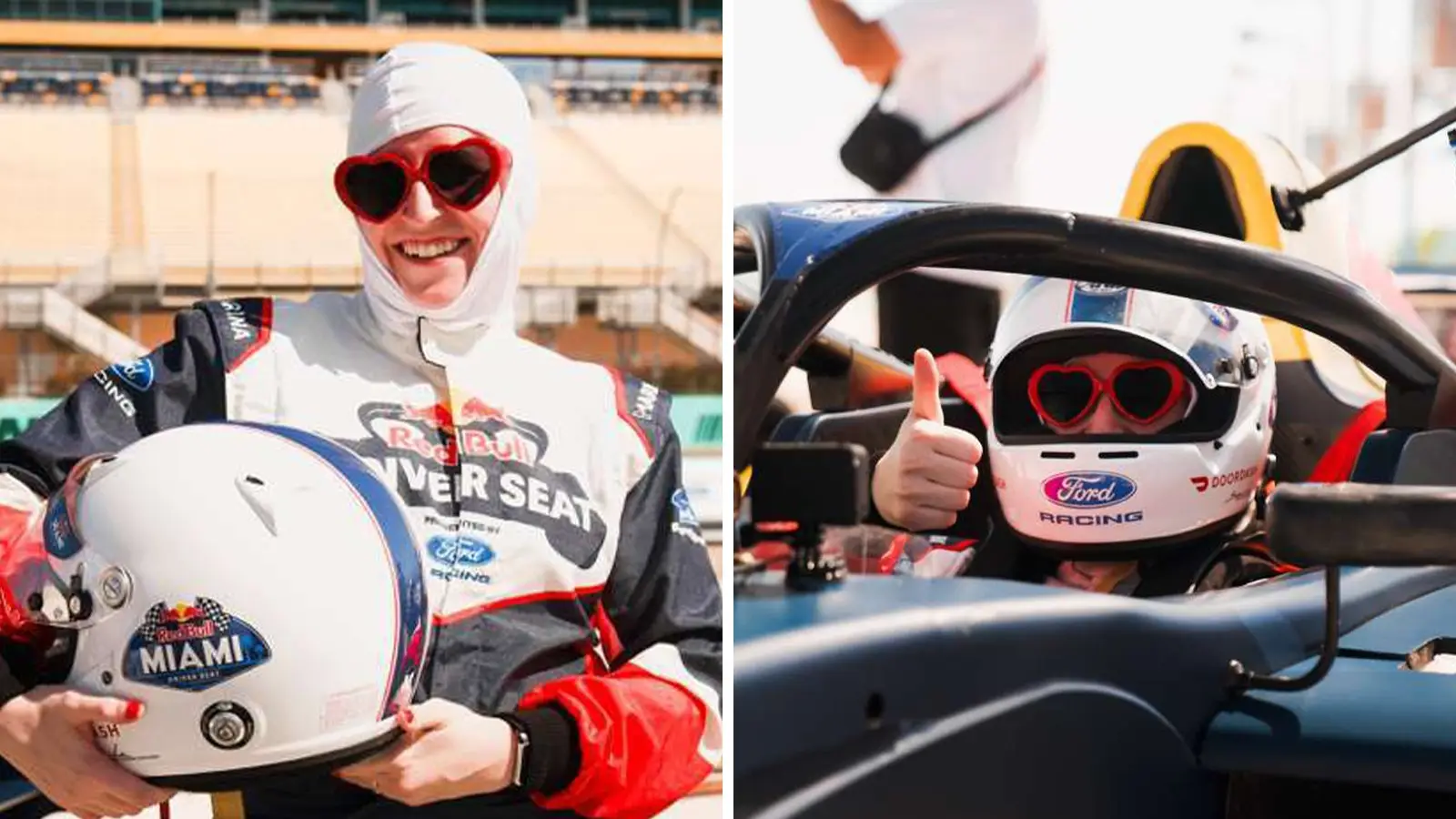
The moment I realized I’d ignored my husband’s advice, it was already too late. I was strapped into the six-point safety harness of a Formula 4 race car, holding an umbrella over the cockpit and trying to aim a leaf blower at the small silver part of my face showing in my cracked helmet.
“Don’t be the first one on track,” he’d said. “Let someone warm up the tires first.”
That way, he said, I’d be less likely to crash.
But there I was, about to be the very first driver on track that day. I was ready to tackle the high banks and twisty turns of Homestead-Miami’s infield road course with only a vague idea of how to drive a stick shift and zero experience in a race car. It was nearly 90°F, but when I remembered his advice, my blood ran cold.
I’m no stranger to fast cars. As a longtime car reporter and motorsport fan, I’ve had plenty of chances to push speed limits behind the wheel. But this day at Homestead was full of firsts: my first time there, my first time driving on banked turns, and my first time driving a manual open-wheel race car—a car that had just raced at Sebring International Raceway.
Red Bull invited me to the Miami Grand Prix for five days packed with energy drinks and racing excitement. Along with a VIP invite to see DJ Khaled unveil a special Racing Bulls livery from a yacht—a very Miami moment!—we had something called “Driver Seat” on the schedule. I didn’t find out until the afternoon before that this meant driving real race cars on a real track. No pressure!
To get ready, I turned to my husband—an expert sim racer used to driving paddle-shift cars like the one I’d be in. The only difference? He’d never driven one on an actual track, and I wasn’t a sim racer. So this was my first time trying to keep a real race car from hitting the wall.
“The hardest part is letting off the clutch,” he warned. “Don’t just dump it. Lift off slowly.”
That’s exactly where I usually mess up with a stick shift—lifting off too fast, stalling the car, and trying not to die of embarrassment.
Luckily, this Formula 4 Ligier only needed one clutch lift to get moving. After that, shifts were done with paddle shifters on the steering wheel: right paddle to go up, left paddle to go down. No clutch pedal pounding for every gear change.
The downside? It’s still a race car—slick tires, strong g-forces, firm brakes. Even if I got moving, the chances of spinning out were high, especially on cold tires and brakes. That’s why I was supposed to let someone else go first.
But the second I got to Homestead, my husband’s advice flew right out of my head. All I wanted was to jump in before my nervous energy turned into full-on panic.
While other media members practiced stick shifts in Mustangs, I took a Mustang lap with a pro driver who showed me the perfect lines, gear changes, and braking spots. I filmed it all, hoping to study later. But the moment we finished, I jumped straight into the first Formula 4 car and told the crew I was ready.
They strapped me in, checked my reach to the pedals, fitted a head-and-neck safety device, and answered my questions. Then they handed me an umbrella for shade, turned a leaf blower on me, and said it would be 15 more minutes before I could go.
Fifteen minutes felt like forever. Sitting there in my first race car, I suddenly remembered my husband’s advice: Don’t be first. Let someone warm up those tires.
But I didn’t want to give up my spot. After four sweaty guys helped get me set up, my pride wouldn’t let me get out of the car. Instead, I focused on slowly releasing the clutch and pressing the throttle—the dance I’d failed so many times before.
I pressed the clutch all the way, took a deep breath, and started lifting slowly. At first, the pedal moved smoothly but then caught. I knew I had to be extra careful at that catch point. My body panicked and wanted to dump the clutch. So I pressed it back down, bubbled a breath, then tried again. Slowly lifting the clutch and pressing the gas. Easy. Another breath. Repeat.
I lost track of how many times I practiced during those 15 minutes as others finished their laps. I even started feeling confident when they told me the engine was firing up behind me and they’d soon push me to the start.
Bonus: no standing start to deal with. The car would already be moving, clutch pressed, so all I’d have to do was lift the clutch and hit the gas when it was time to “go, go, go!”
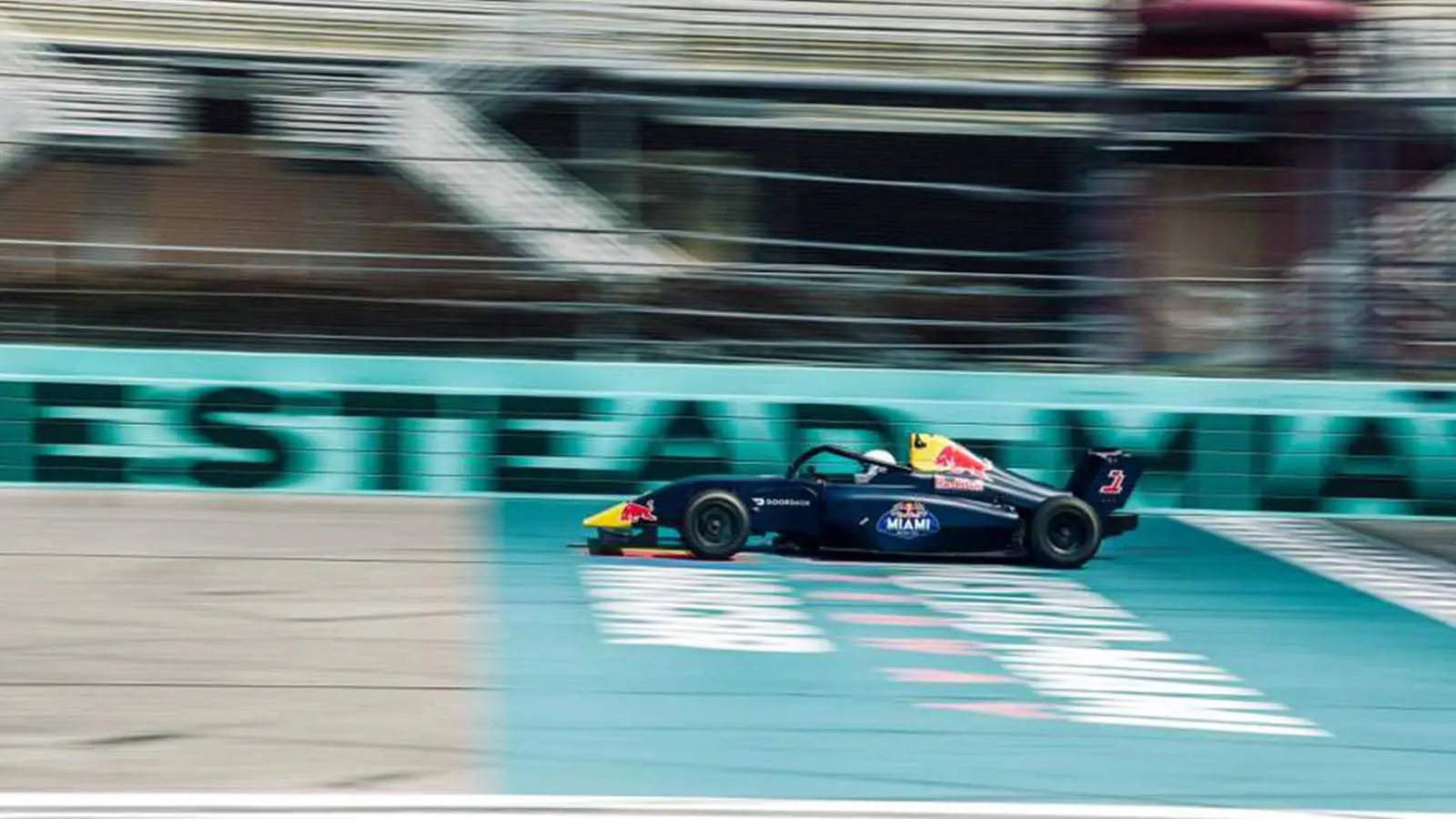
With a little gas and a smooth clutch lift, the car came alive. Nearing the end of pit lane, I shifted into second gear—not smoothly, since I was a little too eager and my revs were off. But no time to worry. Ahead of me, the Mustang lead car hit the first turn and sped away. Now it was my job to catch up.
To my surprise, the car was almost easy to drive compared to other track days I’ve done. The instructor kept saying Formula 4 cars were made for literal kids, so they were pretty stable and simple. When I picked up speed, a green light on the steering wheel told me when to shift up. By the warm-up lap’s end, I’d gotten the hang of shifting up and down using the lights and the engine’s sound.
It helped that these F4 cars only have about 150 horsepower, way less than the 1,000 horsepower Formula 1 cars or the Corvette Z06 I’d driven before. The brake pedal barely moved, so you had to really stomp on it to stop. And the steering wheel responded firmly but wasn’t twitchy.
Honestly, it felt pretty comfortable! On my second lap, I wasn’t even thinking about the car’s quirks anymore—I was focused on going faster and hitting the racing line.
But just like that, it was over. The Mustang lead car pulled into the pits, and I had to follow. Now came the slow-down steps I’d been ignoring: brake, clutch, downshift to first gear, then stop. I’m not sure I did it in the right order.
I was sure I could’ve spent the whole day in that car, turning lap after lap until it felt natural. When I stopped, I was ready to jump back in for more.
But reality hit as soon as I stood up—my legs shook. The adrenaline had left, and it sunk in: I’d just driven a real race car on a real track!
As I caught my breath with a bottle of water, watching my teammates go for their laps, I thought it was kind of wild Red Bull let us do this. F4 cars aren’t the newest tech, but they cost loads, and none of us had experience.
But hey, that’s the Red Bull way—throw yourself into something a bit scary and see what happens.
And guess what? Four laps later, Red Bull had turned me into a race car driver.
SPORTbible was invited to the Miami weekend by Red Bull to celebrate their new Summer Edition, Citrus Zest.
By Elizabeth Blackstock